



Author:Encryption Jianghu
Key Takeaways
How did the de-pegs affect markets?
They triggered forced liquidations and a DeFi bank run that accelerated losses.
How’s the segment now?
The synthetic stablecoins, especially USDe, have lost half of their market caps since the October crash.
Alt HDs
Synthetic Stablecoins depegs: Inside the USDe and xUSD crisisFrom USDe to xUSD: How Stablecoin depegs accelerated crypto’s downfall
The crypto market is still reeling from the aftermath of the 10 October crash – A liquidation cascade triggered by the de-pegging of Ethena’s synthetic dollar, USDe, on the Binance exchange.
In fact, Fundstrat CIO Tom Lee called the automatic liquidation feature or ADL as a “bug” that should have been fixed by pulling price data from other venues.
He added that the cascade destroyed capital and weakened market liquidity.
USDe de-peg and synthetic dollar risks
For the unfamiliar, the ADL (auto-deleveraging) acts like a margin call, closing one’s positions once the price falls below certain collateral thresholds.
The USDe de-peg triggered forced liquidations on Binance and spread across other platforms like fire.
On 10 October, USDe, a synthetic dollar designed to track the U.S dollar at a 1:1 ratio, briefly slipped as low as $0.65, or nearly 40% de-peg, for a few minutes.
Since most of the Futures traders also use USDe as collateral, their positions were forcefully liquidated.
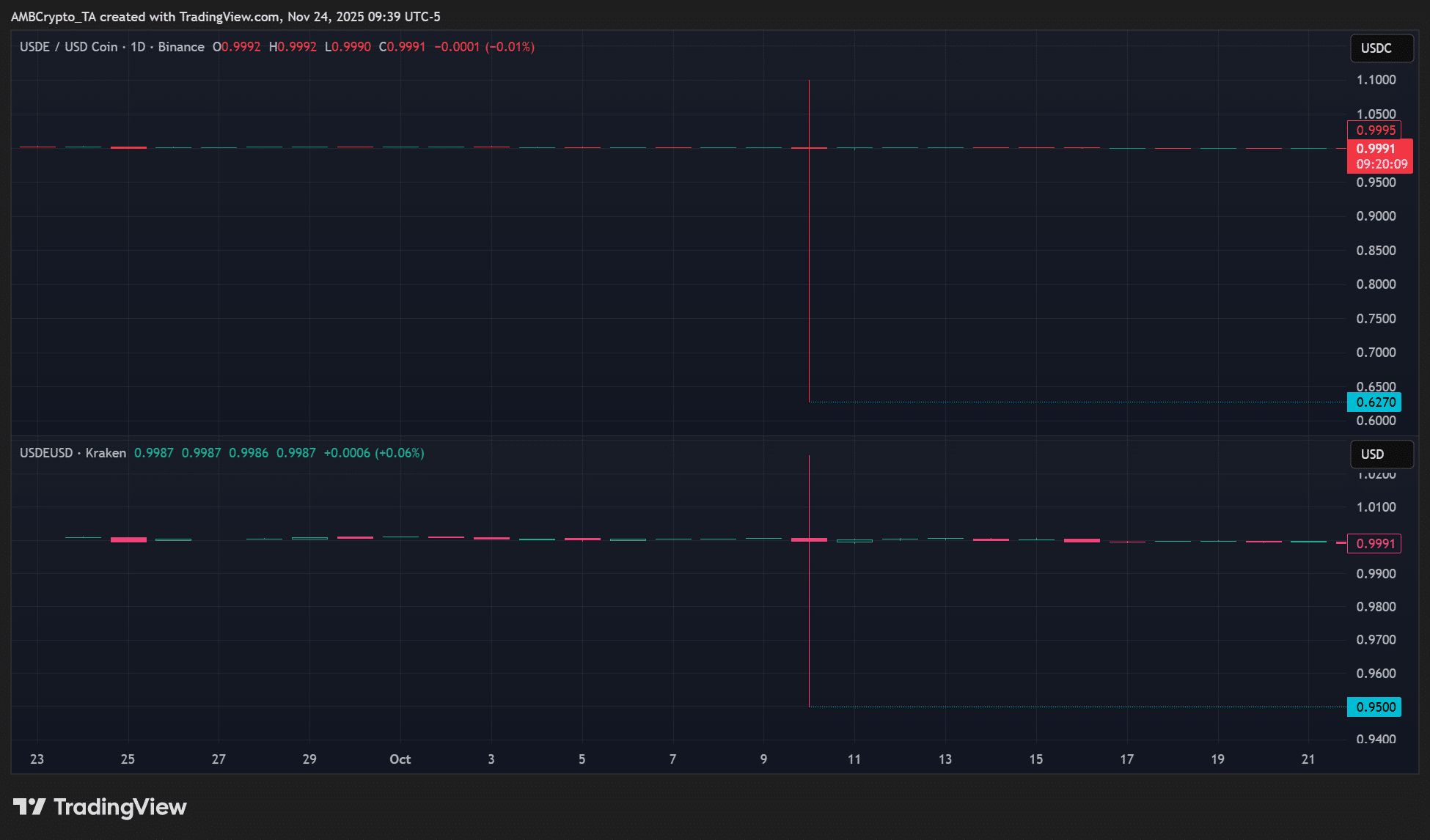
Source: USDe on Binance vs Kraken on the October crash
It also took some time before market makers could access Binance and supply the necessary liquidity to restore the market, further deepening the cascade.
Other platforms and asset pairs were also affected. Venues like Hyperliquid also activated ADL to ensure platform solvency.
The end results? Nearly $20 billion worth of positions were wiped out, demoralised traders and some suicide cases.
The market has never been the same after the crash. The weeks that followed saw BTC crack below $110k and $100k. Now, it is struggling to stay above $90k.
However, the chaos didn’t end in October.
The DeFi contagion
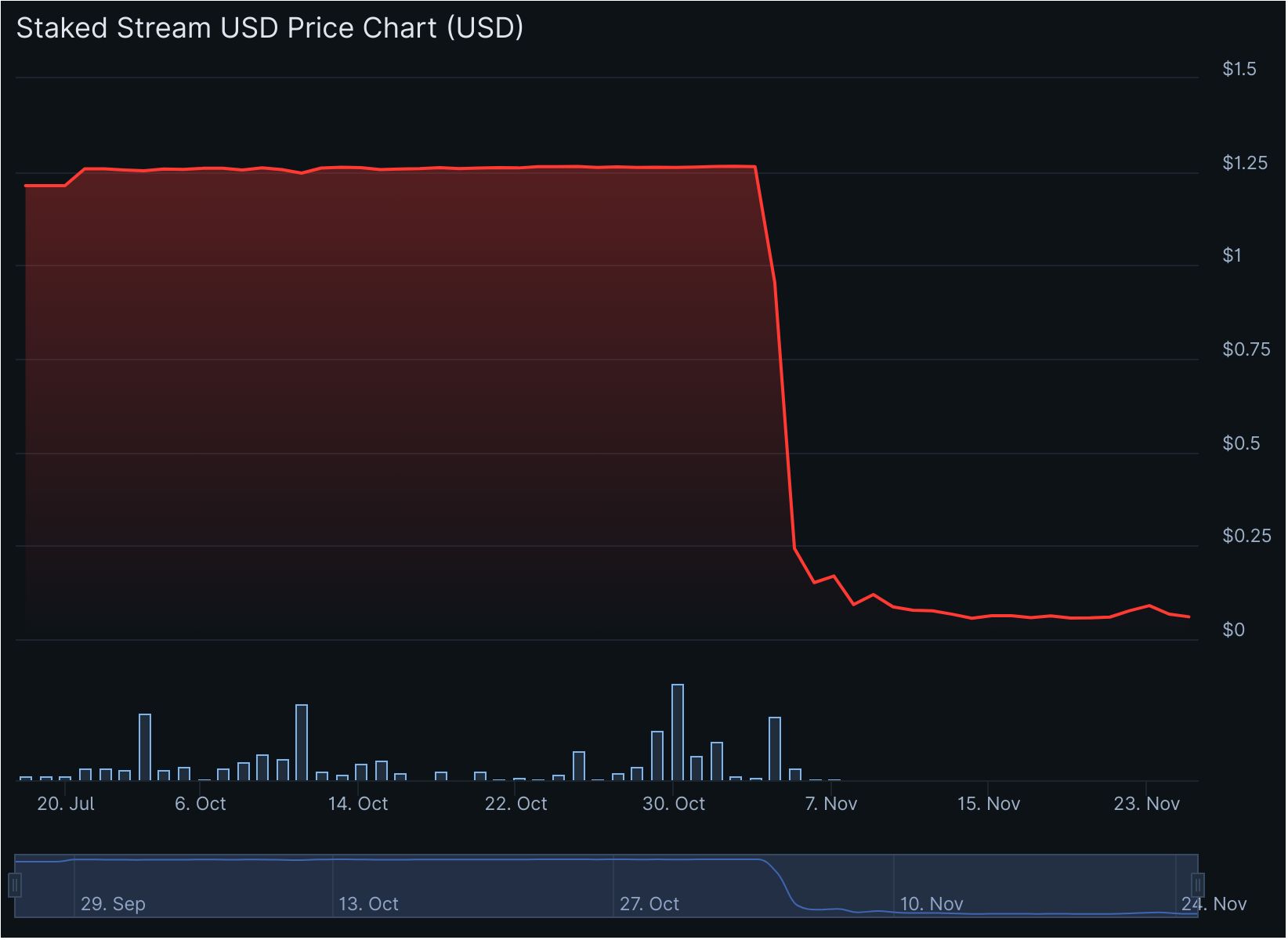
On 04 November, the DeFi ecosystem saw another contagion following a de-pegging event linked to xUSD, a synthetic, yield-bearing stablecoin from Stream Finance.
For the unfamiliar, xUSD, like most interest-bearing stablecoins, accepts deposits from users and then deploys them in “yield-generating” strategies. However, the strategies and reserves should be traceable and verifiable.
Source: Coingecko
For xUSD, everything was murky, and $93 million of user assets were lost to an external fund. It triggered panic, de-pegging, and redemptions across related assets. About +40 billion of DeFi liquidity was wiped out in a few days.
However, xUSD has never regained its 1:1 peg, and the team has gone quiet, leaving users with substantial losses.
Investors are now avoiding the synthetic stablecoins, with USDe’s market cap dropping by half since 10 October.
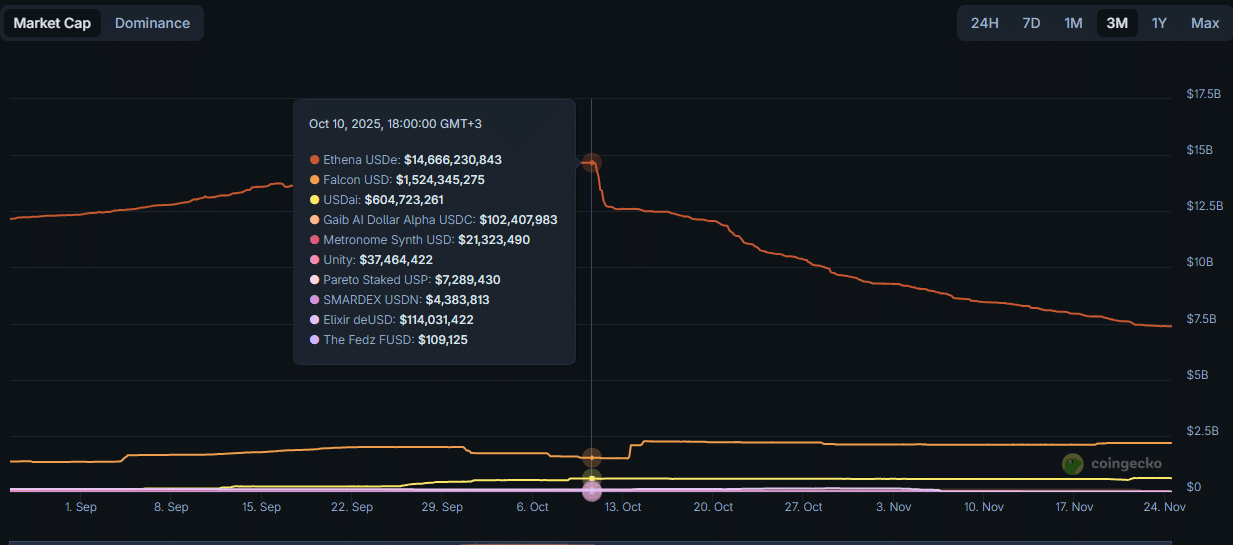
Source: Coingecko